Timing is part of the architecture.
Blueprint-driven platforms interpolate between positions. A reactive variant adds a shift on contact, giving a familiar jump another variable.
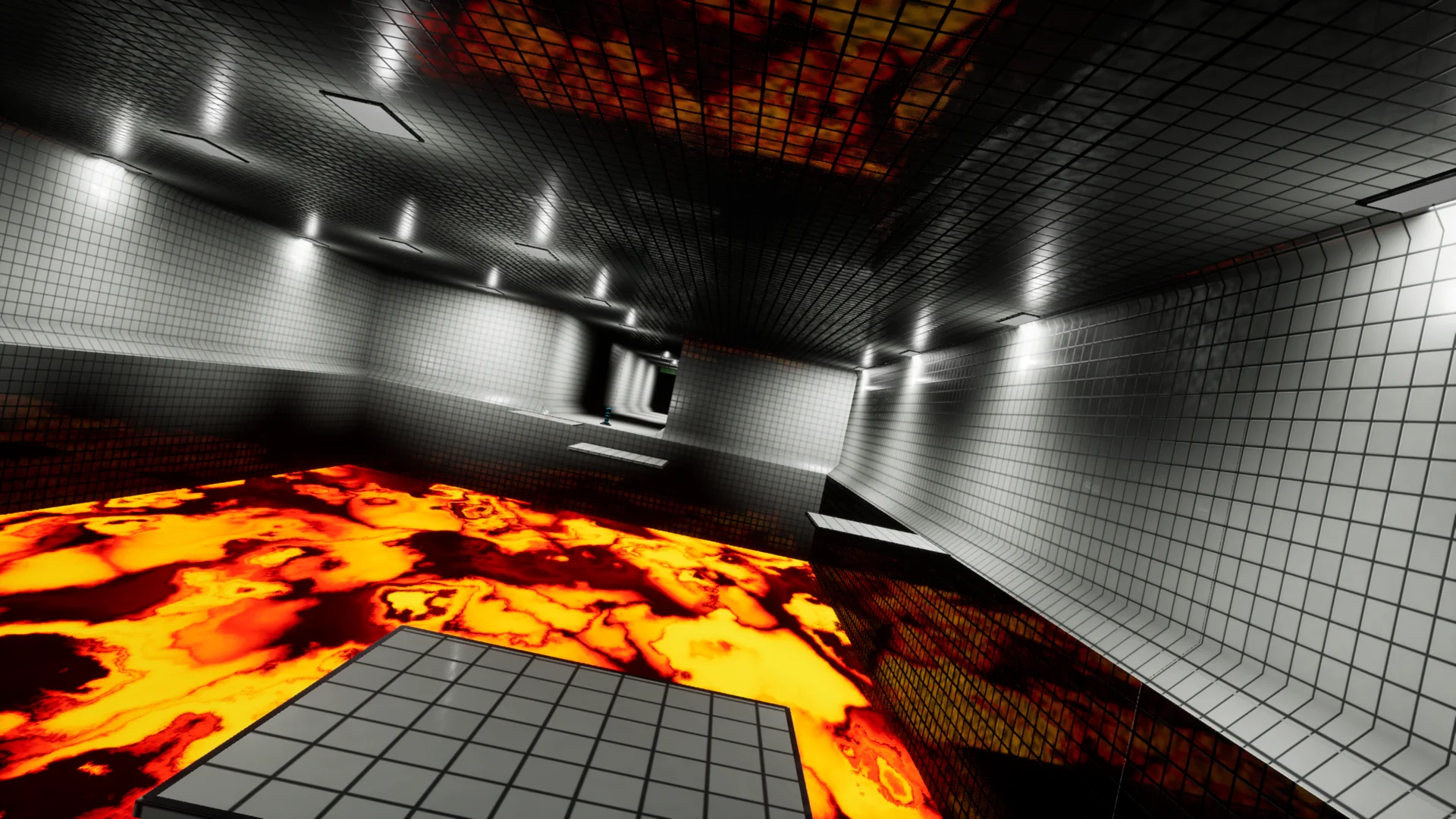
A LITTLE CONFIDENCE GOES A LONG WAY DOWN.
The floor has other plans.
A precision platformer that keeps you guessing.
A clean corridor. A few platforms. Somewhere to go.
Then the platform moves. The floor stops being helpful. And the next attempt starts making a lot more sense.
Read the space. Commit to the jump. Make the next attempt count.
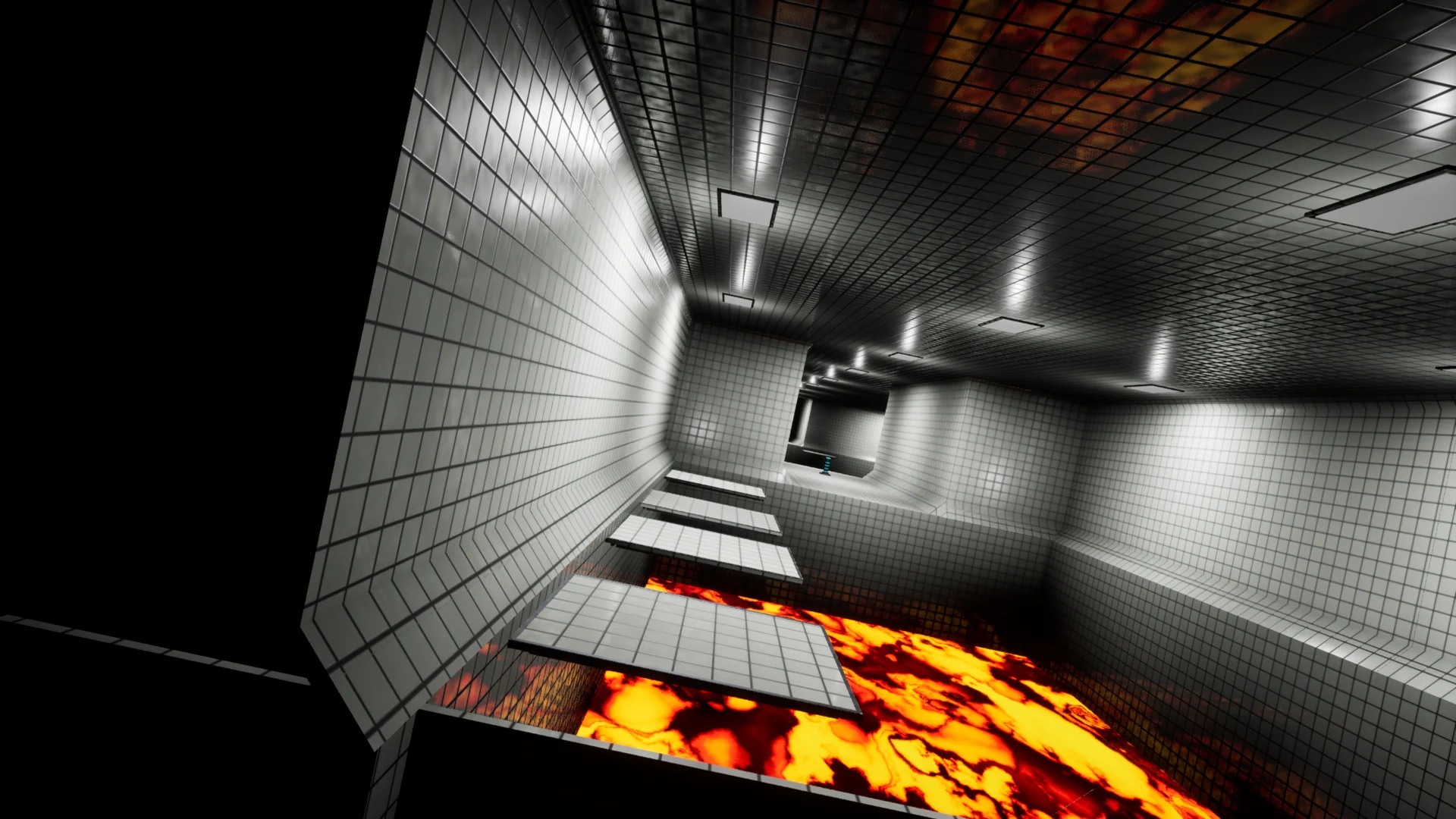
Not every problem is solved
by jumping a little farther.
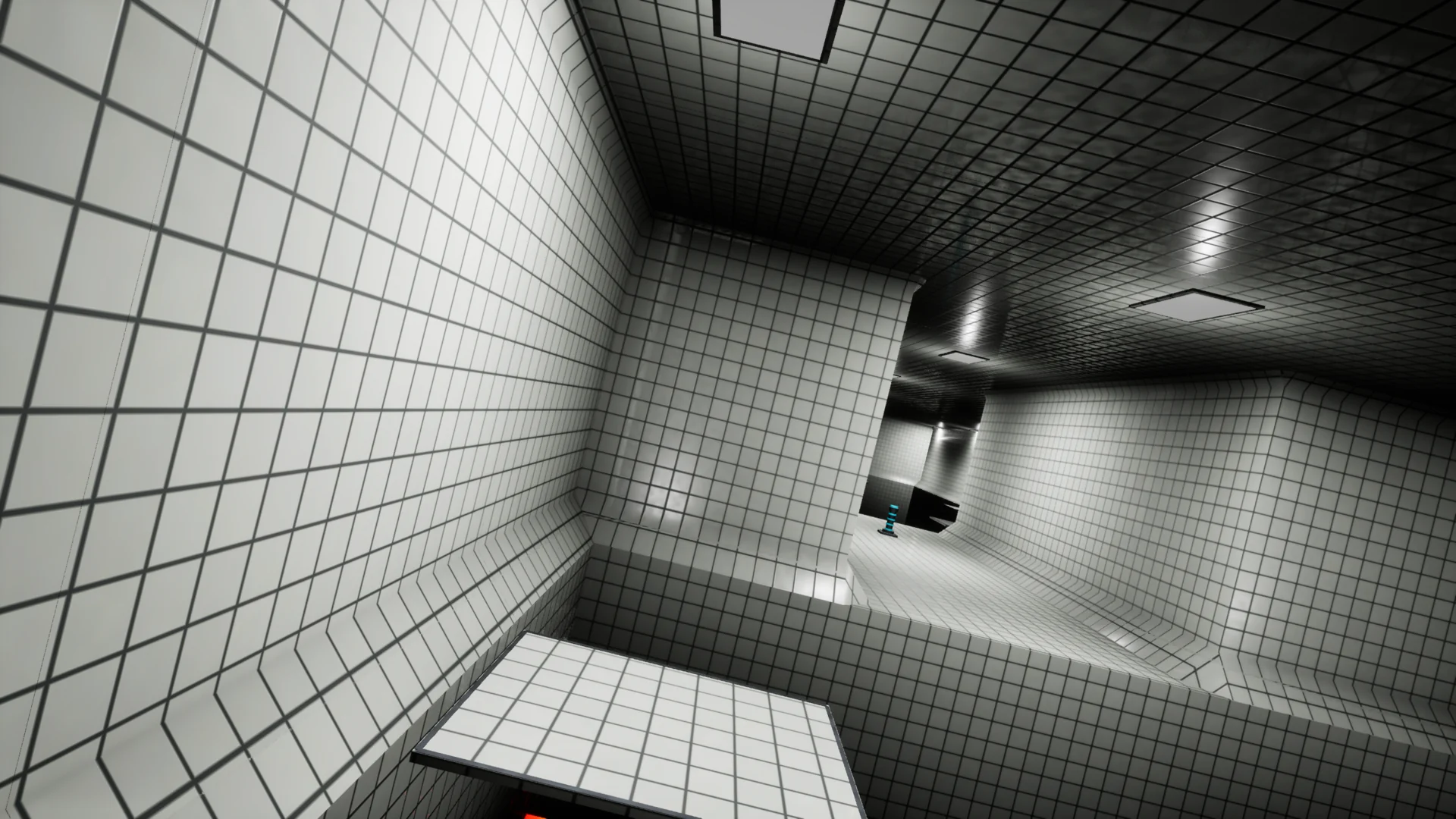 01 / 03ACTUAL IN-ENGINE CAPTURE
Platforms travel between positions. One variant can shift when you make contact. Timing the jump is only part of the problem.
↳ OBSERVED IN THE GAME’S BLUEPRINTSStop the moving tile inside the landing zone.
Close enough isn’t quite enough.
One moving tile. One small window.
Reduced motion is enabled. Use the position slider to place the tile, then check your landing.
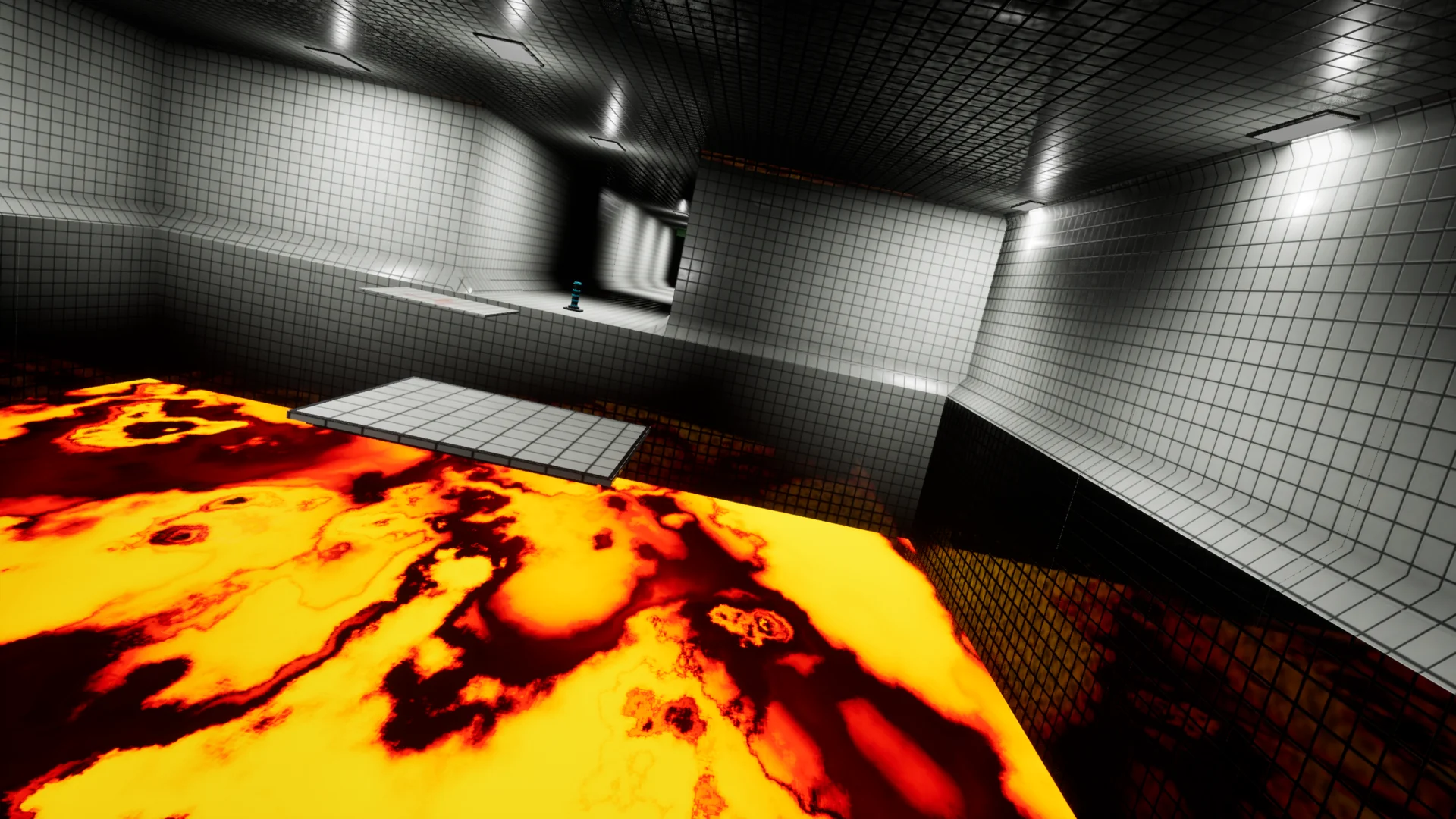
Checkpoints give you somewhere to return to.
The retry system resets traps for another attempt.
Same challenge. A little more understanding.
Inside the current build.
No promises about your landing.
BEHIND THE DEVELOPMENT
The interesting part isn’t how many obstacles fit in a room. It’s what happens when a familiar platform behaves a little differently.
Blueprint-driven platforms interpolate between positions. A reactive variant adds a shift on contact, giving a familiar jump another variable.
The retry flow briefly stops movement, returns the player to a respawn location, and calls the trap-reset interface before handing back control.
These are captures from the current development project. Environments, presentation, and the final course are still evolving.
Confidence comes back.
So will you.